
Blog
Engine Oil Grades Explained: 5W-30 vs 10W-40 vs 20W-40 for Indian Conditions

Choosing the correct engine oil is crucial for vehicle longevity and performance, especially in India where temperatures swing from 5°C in winter to 48°C in summer. Engine oil grades like SAE 5W-30, SAE 10W-40, and SAE 20W-40 denote specific viscosity characteristics defined by the SAE J300 standard. Understanding these grades helps drivers select an oil that protects their engine, enhances fuel efficiency, and ensures smooth operation regardless of climate.
Key Takeaways
• SAE 5W-30 is ideal for BS6 petrol cars and motorcycles in northern India
• SAE 10W-40 balances cold starts and high-temperature protection for most Indian conditions
• SAE 20W-40 provides robust protection for heavy-duty applications and consistently hot climates
• Always follow your vehicle manufacturer’s recommendations — see our complete selection guide
What Do Engine Oil Grades Mean? Understanding the SAE J300 Standard
Engine oil grades classify lubricants by their viscosity — a fundamental property indicating resistance to flow. The Society of Automotive Engineers (SAE) developed the J300 standard to provide a universal classification system. A typical multi-grade oil designation such as 5W-30 consists of two numbers separated by a “W” (Winter), each describing performance at different temperatures:
- The first number (pre-W): Indicates viscosity at low temperatures. A lower number means the oil is thinner when cold, allowing faster flow during cold starts — crucial for reducing wear during the critical startup phase. For example, a 5W oil flows more easily than a 10W oil at freezing temperatures.
- The second number: Indicates viscosity at high operating temperatures (100°C). A higher number means the oil maintains a thicker protective film under heat and stress. A 40-grade oil is thicker than a 30-grade oil at 100°C, providing robust protection in hot climates and under heavy loads.
Multi-grade oils achieve these dual characteristics through polymer additives that change behavior with temperature, allowing the oil to flow like a thin oil when cold and protect like a thicker oil when hot. The SAE J300 standard includes specific tests — cold cranking simulator, mini-rotary viscometer, kinematic viscosity, and high-shear-rate viscosity — to ensure oils truly meet their labeled grade.
Adhering to the manufacturer’s recommended SAE grade is critical. Engine designs are optimized for specific viscosities to achieve fuel efficiency, emission targets, and wear protection. Using the wrong grade can lead to increased wear and costly machinery damage.
SAE 5W-30: Precision Protection for BS6 Engines
SAE 5W-30 delivers exceptional low-temperature fluidity alongside high-temperature shear stability, making it the preferred grade for modern BS-VI petrol vehicles. The “5W” designation ensures rapid oil circulation during cold starts, while the “30” provides sufficient film strength at operating temperatures to protect engine parts while contributing to fuel efficiency.
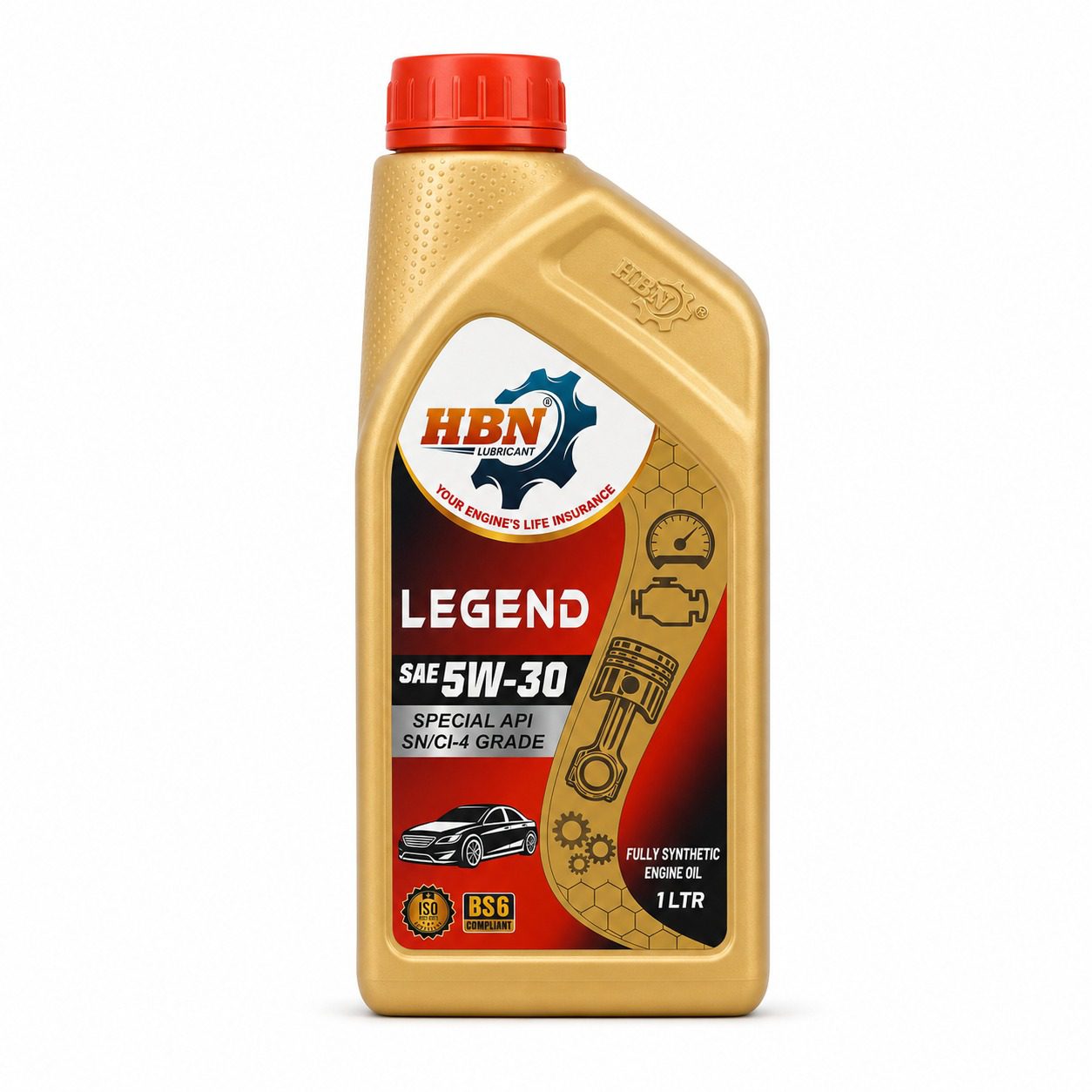
Best For:
- BS6 compliant vehicles — tighter tolerances and advanced emission control systems benefit from quick circulation and reduced friction
- Colder regions — Himalayan states and northern plains during winter; ensures reliable cold starts
- Fuel economy priority — lower hot viscosity reduces internal engine drag
- Start-stop systems — rapid lubrication protects through frequent restarts
Synthetic 5W-30 formulations like HBN’s premium options ensure superior engine cleanliness, excellent wear protection, and optimized fuel economy — reducing friction and combating sludge buildup even under varying driving conditions.
SAE 10W-40: The Balanced All-Rounder
SAE 10W-40 strikes an optimal balance between cold-weather performance and high-temperature protection. The “10W” provides adequate cold-start flow for most Indian winter conditions, while the “40” delivers a thicker protective film at operating temperatures — offering enhanced protection against wear, particularly for engines that run hotter or operate under consistent load.
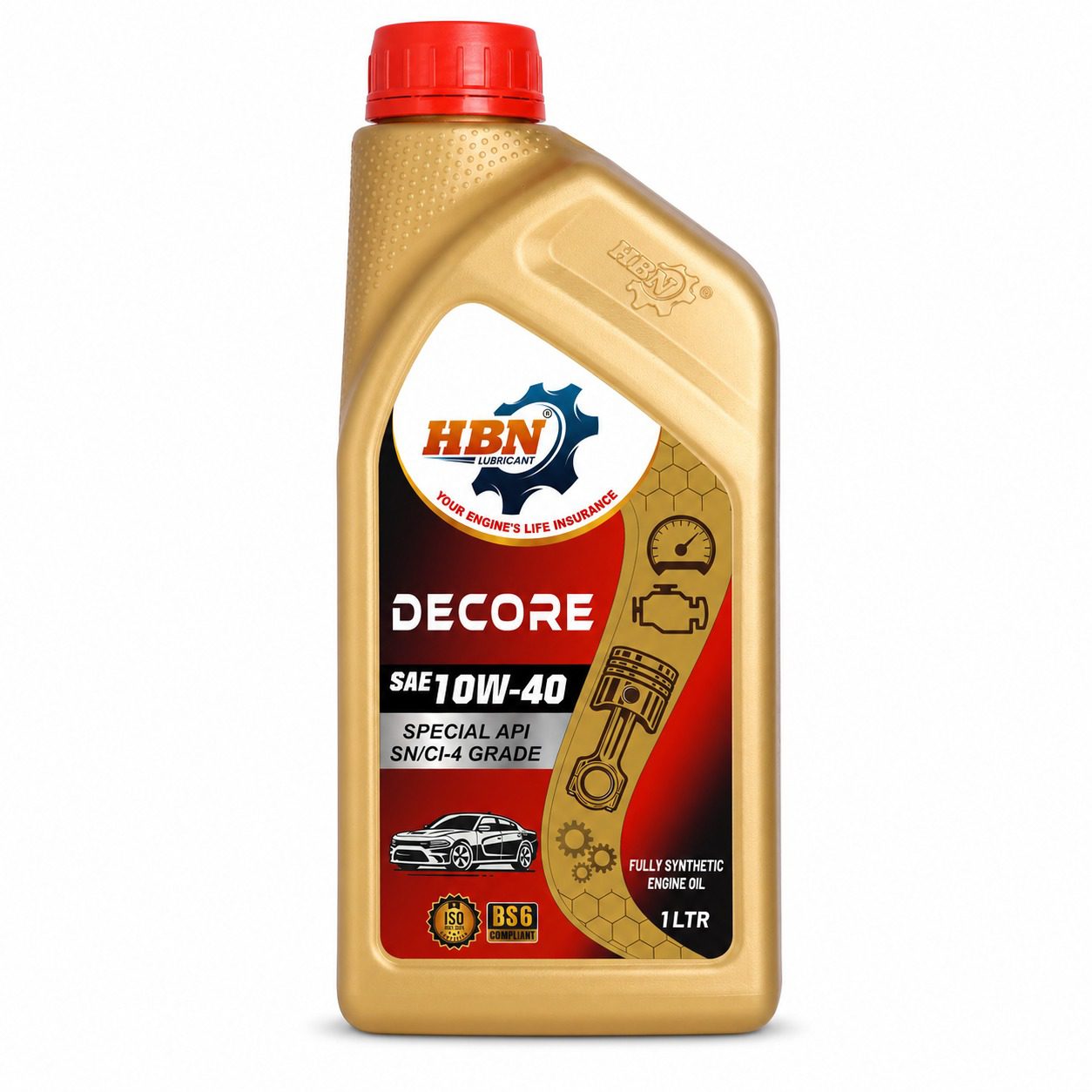
Best For:
- Varied climates — reliable year-round performance across moderate winters and hot summers
- Older engines (BS4 and earlier) — broader tolerances benefit from thicker operating-temperature film
- High-mileage vehicles — helps maintain oil pressure and reduce consumption
- Moderate to heavy duty — stop-and-go city driving, moderate loads, mixed-use fleets
Advanced 10W-40 formulations resist oxidation, minimize sludge, and provide superior wear protection — ensuring engine health and performance consistency throughout the service interval.
SAE 20W-40: Robust Protection for Heavy Loads and Hot Climates
SAE 20W-40 represents a more robust multi-grade option, tailored for environments where high ambient temperatures are the norm. The “20W” indicates thicker cold-start behavior compared to 5W or 10W oils, making it less ideal for extreme cold. However, the “40” provides a significant advantage: a robust, stable oil film at high operating temperatures that delivers superior protection against thermal breakdown and wear.
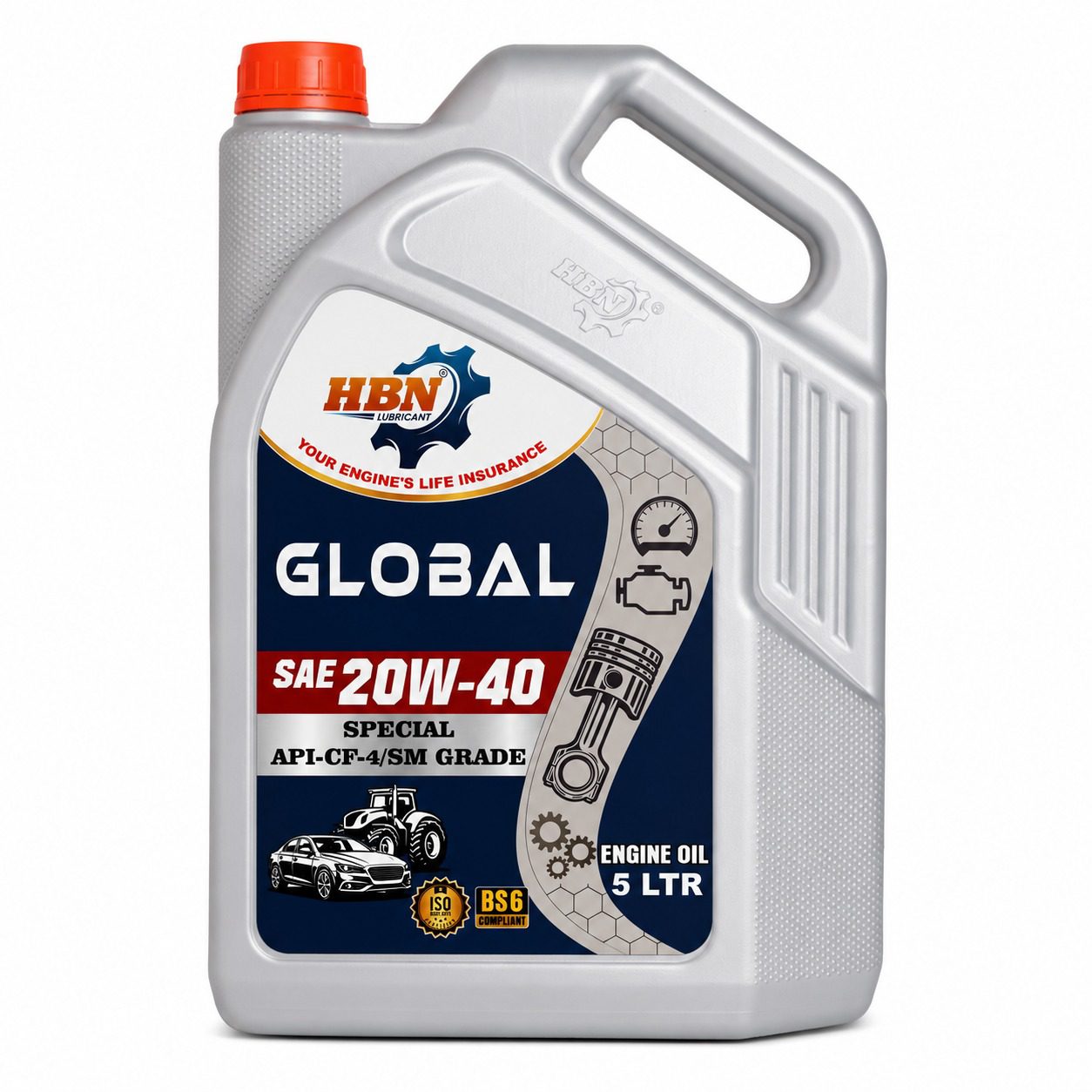
Best For:
- Consistently hot climates — regions where temperatures regularly exceed 40°C in summer
- Older and commercial vehicles — trucks, buses, agricultural machinery designed for 20W-40
- Heavy-load operations — sustained highway driving, towing, continuous high-load work
- Northern India in summer — intense heat across the vast plains and central regions
Robust 20W-40 formulations withstand extreme heat, prevent sludge formation, and maintain engine performance in the most demanding Indian conditions — prolonging engine life by minimizing wear under sustained stress.
Engine Oil Selection Guide for Indian Conditions
India’s vast geography — from sub-zero Himalayan winters to 48°C desert summers — makes viscosity selection critical. Here is a region-by-region recommendation based on climate zone, engine type, and driving conditions:
| Region | Recommended Grades | Key Considerations |
|---|---|---|
| North — Himalayan Regions | 5W-30, 0W-XX | Sub-zero winters require excellent cold-flow properties |
| North — Plains (Delhi, Punjab, UP) | 5W-30 (BS6), 10W-40 (older engines) | Hot summers + cold winters; year-round balanced protection needed |
| West — Rajasthan, Gujarat | 10W-40, 20W-40 | Extreme summer heat; older/heavy-duty vehicles benefit from 20W-40 |
| East — West Bengal, Bihar | 10W-40 | Balanced grade works across varied seasonal conditions |
| South — Tamil Nadu, Kerala, Karnataka | 5W-30 (modern), 10W-40 (balanced) | Humid heat + moderate winters; fuel efficiency and thermal stability both matter |
Always prioritize your manufacturer’s recommendation first. Beyond climate, consider your engine’s age (newer BS6 engines need lower-viscosity synthetics) and driving style (heavy loads and stop-and-go traffic demand robust thermal protection). For more detail, see our complete engine oil selection guide.
The Indian Engine Oil Market: Trends and Outlook
The Indian automotive lubricants market is evolving rapidly, driven by stricter emission norms and increasing vehicle parc. According to Mordor Intelligence, the market is projected at a 0.39% CAGR through 2031, reflecting a mature market undergoing significant qualitative shifts rather than simple volume growth.

Key Market Drivers:
- BS-VI Stage-2 emission norms — forcing shift to low-viscosity, low-SAPS synthetic oils (5W-30, 0W-20)
- Expanding vehicle parc — growing demand across passenger cars, two-wheelers, and commercial fleets
- Premiumization trend — Indian consumers increasingly choosing synthetic and semi-synthetic grades for better protection
- CNG fleet growth — specialized lubricant formulations needed for higher combustion temperatures
- Extended drain intervals — modern synthetic oils enable longer service periods, reducing total cost of ownership
The market’s evolution points toward specialized, high-performance lubricants replacing generic mineral oils — with manufacturers like HBN developing products that align with both regulatory requirements and consumer expectations.
Frequently Asked Questions
Can I use 10W-40 in a BS6 car?
Yes, but 5W-30 is recommended for optimal performance. BS6 engines feature tighter tolerances and advanced emission control systems that benefit from the quick circulation and reduced friction of lower-viscosity oils. Always confirm with your owner’s manual.
How often should I change my engine oil in India?
Follow your manufacturer’s recommendation — typically every 5,000–10,000 km for mineral oils, and 10,000–15,000 km for synthetics. Severe conditions (heavy traffic, dusty roads, short trips) require more frequent changes. Learn the signs it’s time to change your oil.
What is the difference between synthetic and mineral oil?
Synthetic oils are engineered with uniform molecular structures that resist thermal breakdown, reduce friction, and maintain viscosity over longer periods. They perform better in extreme conditions, support extended drain intervals, and provide superior engine cleanliness compared to mineral oils.
Can I mix different engine oil grades?
Mixing grades is not recommended. While modern oils are usually chemically compatible, mixing dilutes the performance characteristics (viscosity, additive package) of each oil, potentially compromising protection. Always drain completely before switching grades.
Which HBN product should I choose?
For BS6 petrol cars, look for HBN’s fully synthetic 5W-30 range. For older engines and mixed conditions, HBN’s 10W-40 semi-synthetic offers balanced protection. For heavy-duty commercial applications, HBN’s 20W-40 provides the robust thermal stability required.
Conclusion: Choose the Right Grade, Protect Your Engine
Selecting the correct engine oil grade is a critical decision for vehicle performance, fuel efficiency, and long-term durability. The SAE J300 standard provides a clear framework: 5W-30 for modern BS6 engines and colder regions; 10W-40 for balanced all-around protection; 20W-40 for heavy-duty applications and consistently hot climates.
Premium synthetic formulations — engineered for Indian conditions — deliver superior wear protection, reduced friction, and extended drain intervals compared to conventional mineral oils. Whether you’re navigating Himalayan winters or Rajasthan summers, matching viscosity to climate and engine requirements ensures optimal performance and longevity.
Next steps:
- Check your vehicle’s owner’s manual for the exact recommended SAE grade and API service category
- Assess your typical driving conditions and local climate zone
- Read our complete guide to choosing the right engine oil
- Avoid common lubrication mistakes that damage engines